AI ATS vs HRM Modules vs Project Management Tools: Which Recruitment Solution Should You Choose?
A detailed comparison between a specialised ATS platform with native AI (Recrutio), recruitment modules within HRM/HRIS, and generic project management tools. Efficiency, data quality, TCO, and ROI for SMEs.
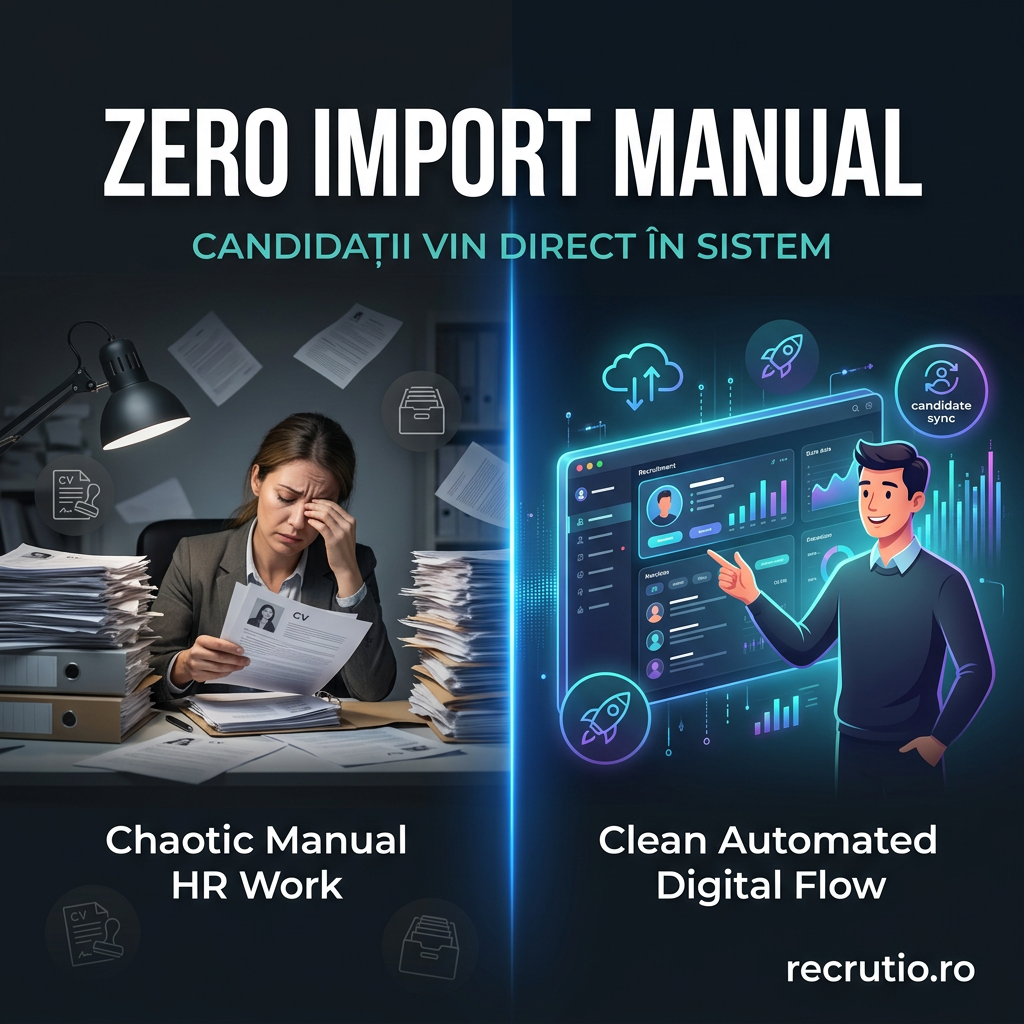
HR managers and professionals in Small and Medium-sized Enterprises (SMEs) face a constant challenge: how to attract top talent with limited resources. The market offers a multitude of digital tools, each promising to streamline the hiring process. However, the wrong choice can lead to wasted time, hidden costs, and, most importantly, missing out on the right candidates.
The decision is not merely about choosing software, but about adopting a recruitment strategy. In this comparative analysis, we evaluate three common approaches taken by SMEs: using a specialised ATS platform with native AI such as Recrutio, implementing recruitment modules within HRM/HRIS systems, and adapting generic project management tools. The aim is to provide a clear perspective on the return on investment (ROI) and long-term strategic value of each option.
For details on how the score is calculated, see the Recrutio methodology. The licence is determined following an analysis of company needs — details on the pricing page, with all modules included.
Recrutio: the specialised ATS platform with native artificial intelligence
Recrutio is designed from the ground up as an Applicant Tracking System (ATS) dedicated to optimising every stage of the recruitment process for SMEs. It is not an add-on module to a larger system, but a specialised solution. Its key differentiator is the native integration of artificial intelligence. This is not a simple add-on, but the engine powering key features: from scanning and scoring hundreds of CVs in minutes, to analysing video interviews.
For an SME, this translates into massive administrative time savings, allowing the HR team to focus on quality human interaction with top candidates. Furthermore, the platform helps build a strategic asset – a proprietary talent database, structured and easily searchable for future roles, reducing reliance on costly external sources.
Recruitment modules in HRM/HRIS platforms
Many companies already use a human resource management (HRM) system or a human resources information system (HRIS) to manage time tracking, payroll, or performance reviews. Most of these platforms offer a recruitment module as part of the package. The main advantage is centralisation: a new hire's data can be easily transferred from the recruitment module to the administrative module.
However, the trade-off is often functionality. These modules generally offer basic capabilities: posting a job and creating a simple pipeline of stages (e.g. Applied, Interview, Hired). They often lack the advanced features that deliver real efficiency: automated CV scoring is non-existent or rudimentary, there is no AI analysis of interviews, and capabilities to build and search a talent pool are limited. They serve as a system of record, not as a strategic optimisation engine.
Project management tools adapted for recruitment
At the opposite end of the complexity spectrum lies the use of generic project management tools, such as Trello, Asana, or even Excel spreadsheets, to manage candidates. This approach is popular among startups due to zero or very low cost and familiarity. A Kanban board can provide a simple view of candidates across different stages.
However, this solution quickly reaches its limits. Every step is completely manual: CVs must be downloaded, read, and evaluated individually; communication with candidates is not centralised; there is no form of automation or reporting. The risk of human error is high, and the time spent on administrative tasks grows exponentially with the number of applicants. This method does not allow for building a talent database and provides no strategic insights (KPIs) into process efficiency, turning recruitment into a reactive and disorganised activity.
Comparative analysis of key criteria
To make an informed decision, it is essential to compare the three solutions based on concrete business criteria.
Efficiency and automation
Recrutio excels here, automating time-consuming tasks. HRM modules offer minimal automation, while project management tools offer no automation at all. The difference is measured in dozens or even hundreds of hours saved annually per recruiter.
Data quality and decision-making
With Recrutio, decisions are data-driven (match scores, KPIs such as time-to-hire). HRM systems provide basic reports, whereas generic tools offer no analytics, basing decisions purely on gut feeling.
Total cost of ownership (TCO)
Although project management tools appear free, their true cost lies in hours of manual labour. HRM modules may seem convenient, but can be part of an expensive package with limited functionality for recruitment. Recrutio has a transparent, usage-based pricing model where the investment is directly reflected in efficiency and results, delivering a predictable TCO and a clear ROI.
When should you choose each solution?
The right choice depends on your company's stage of development and strategic objectives. Here is a quick guide:
- Choose project management tools if: You are an early-stage startup with very low recruitment volume (1–2 roles per year) and virtually no budget for dedicated software.
- Choose an HRM recruitment module if: The absolute priority is centralising all HR functions into a single platform, and your recruitment needs are basic and do not represent a strategic growth factor.
- Choose Recrutio if: Recruitment is a strategic function for business growth, you want to significantly reduce the time spent on administrative tasks, make data-driven hiring decisions, and build a long-term competitive advantage through your own talent database.
Conclusion: an investment in performance, not just a tool
In conclusion, while alternatives such as HRM modules or project management tools may seem adequate at first glance, they often represent a compromise that caps an SME's growth potential. They manage a process, but do not optimise it. A specialised ATS platform with native AI, like Recrutio, is more than just software – it is a strategic partner.
By automating repetitive tasks and providing clear data for decision-making, Recrutio frees up the HR team's most valuable resource: the time to build relationships with exceptional candidates. For SMEs in Romania and Europe looking to compete for top talent at the highest level, investing in a dedicated solution is not a cost, but an essential driver of long-term success.
See Recrutio on your company's process
We talk concretely about volume, roles and the reporting your management needs.
Book a presentationRead also
How Recrutio Generates Interview Questions No Recruiter Could Ask on Their Own
Recrutio's AI video interview crafts questions in real time, drawing from the candidate's CV, the job description, and the recruiter's settings — rather than from a fixed list of generic questions.
Automatic CV scoring, regardless of application source: how to centralise and assess candidates with AI
eJobs, email, or manually uploaded CVs — Recrutio automatically scores every candidate with AI, regardless of channel, bringing all your applications into one place.
Recrutio vs agencies vs classic ATS: comparison for companies with high application volumes
Recruitment agency, classic ATS, or native AI ATS platform? Detailed comparison on cost and ROI, speed, control, and scalability for Romanian SMEs.