Video Interviews in Recruitment: A Complete Guide for Romanian Companies (2026)
How do you use video interviews in recruitment if you are a Romanian SME? Practical 2026 guide: types of video interviews, what to ask candidates, and how to save time with an ATS.
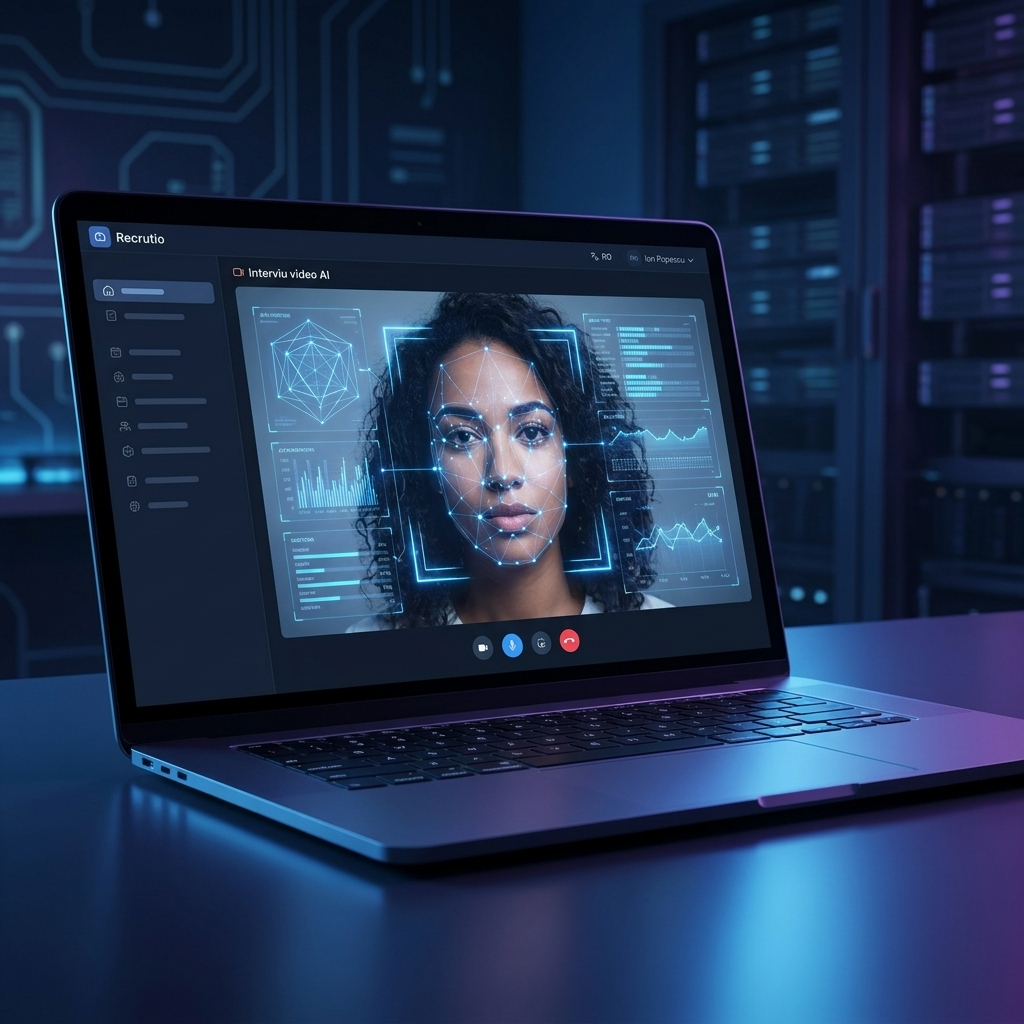
If you have hired in recent years, you know that a traditional CV does not tell you everything you need to know about a candidate. Over two-thirds of employers believe it is very important to see a candidate's personality and communication style before an official interview — and that is precisely why video interviews are gaining significant ground in recruitment processes across Romania.
But how do you put this into practice if you are an SME without a dedicated HR department? This guide explains it step by step.
See an example in the article on AI-generated interview questions and how they connect to the CV score in Recrutio's methodology.
What a Video Interview in Recruitment Is and Why It Matters in 2026
A video interview in recruitment means asking candidates to answer a few recorded questions before inviting them to a face-to-face interview. It can be asynchronous (the candidate records their answers independently) or live (a scheduled video call).
The traditional CV is increasingly perceived as insufficient to assess a person's true fit. Video interviews solve this exact problem: they allow you to evaluate communication skills, energy, and personality — without losing hours on screening phone calls.
In an increasingly tech-driven labour market, the job interview is evolving towards a practical demonstration of skills. For SMEs, this means a clear advantage: you hire faster and with greater precision.
Types of Video Interviews — What Works for SMEs
1. Asynchronous (Pre-recorded) Video Interview
The most efficient format for screening. You send the candidate 3–5 questions, they record them whenever they have time, and you review them when you have time. No scheduling required, no calendar conflicts.
When to use it: after CV screening, before deciding who deserves a face-to-face interview.
2. Live Video Interview (Video Call)
The classic Zoom or Meet call — useful for advanced stages when you want a real conversation. It requires scheduling, but saves travel time for both parties.
When to use it: after the asynchronous video interview, for shortlisted candidates.
3. Structured Video Interview with Standardised Questions
All candidates answer the same questions, in the same format. This increases evaluation consistency and reduces selection bias.
What Questions to Ask in a Screening Video Interview
Keep it short — maximum 3–4 questions, 2–3 minutes in total. Practical examples:
- "Introduce yourself in 60 seconds and tell us why you applied for this role." — tests communication and motivation
- "What is the most relevant project from your experience for this position?" — tests relevance of experience
- "How do you manage a situation where you have multiple deadlines at once?" — tests organisation and composure under pressure
- "What do you know about our company, and what appeals to you about what we do?" — filters candidates who have done their research from those who apply to dozens of jobs without reading anything
Concrete Benefits for a Romanian SME
Time savings. Video interviews help employers understand faster whether a candidate fits the organisational culture and save time during the preselection stage. Instead of 10 phone calls lasting 20 minutes each, you review 10 three-minute clips whenever you have a spare moment.
Better candidates. Many candidates believe their chances of being invited to an official interview would increase if they could introduce themselves via a short video. Introducing video interviews into your workflow therefore attracts more motivated candidates.
More consistent evaluation. When all candidates answer the same questions, comparisons become fair. You reduce the influence of first impressions and decision fatigue.
Faster feedback. Candidates' primary frustration remains the lack of feedback on traditional applications. Video interviews help you process applications faster and provide a timely response — which also enhances your employer brand.
How to Integrate Video Interviews into an ATS
If you manage recruitment manually — via email and Excel sheets — video interviews add a layer of complexity. You receive dozens of video links, lose track of each candidate's stage, and lose the thread of conversations.
The solution is an ATS (Applicant Tracking System) that integrates video interviews directly into the hiring pipeline. In practice, this means:
- You send the video interview invitation directly from the platform
- The candidate records their answers and uploads them in the same place
- You review, score, and move the candidate to the next stage — without switching applications
- The entire team sees the same profile, the same notes, and the same videos
On Recrutio, video interviews are natively integrated into the recruitment process. You can configure questions, set response deadlines, and evaluate candidates directly from the dashboard — without wasting time on logistics.
Common Mistakes SMEs Make with Video Interviews
1. Too many questions. If you ask for 10 questions of 5 minutes each, candidates drop out. Keep it to a maximum of 4 short questions.
2. No clear instructions. Tell the candidate exactly what you expect: format, duration, whether it is asynchronous or live, and when they will receive a response.
3. Inconsistent evaluation. If a colleague reviews videos differently from you, you will reach divergent conclusions. Establish a clear set of criteria before sending the first invitation.
4. Using it as a complete substitute for human interaction. A video interview is a preselection filter, not a final decision. Strong candidates deserve genuine dialogue before an offer is made.
Conclusion: Video Interviews Are Accessible to Any SME
You do not need a large HR department or corporate recruitment budgets. A simple workflow — automated CV screening → asynchronous video interview → live interview with top candidates — can significantly reduce your time-to-hire and increase hiring quality.
See Recrutio on your company's process
We talk concretely about volume, roles and the reporting your management needs.
Book a presentationRead also
How Recrutio Generates Interview Questions No Recruiter Could Ask on Their Own
Recrutio's AI video interview crafts questions in real time, drawing from the candidate's CV, the job description, and the recruiter's settings — rather than from a fixed list of generic questions.
Automatic CV scoring, regardless of application source: how to centralise and assess candidates with AI
eJobs, email, or manually uploaded CVs — Recrutio automatically scores every candidate with AI, regardless of channel, bringing all your applications into one place.
AI ATS vs HRM Modules vs Project Management Tools: Which Recruitment Solution Should You Choose?
A detailed comparison between a specialised ATS platform with native AI (Recrutio), recruitment modules within HRM/HRIS, and generic project management tools. Efficiency, data quality, TCO, and ROI for SMEs.